


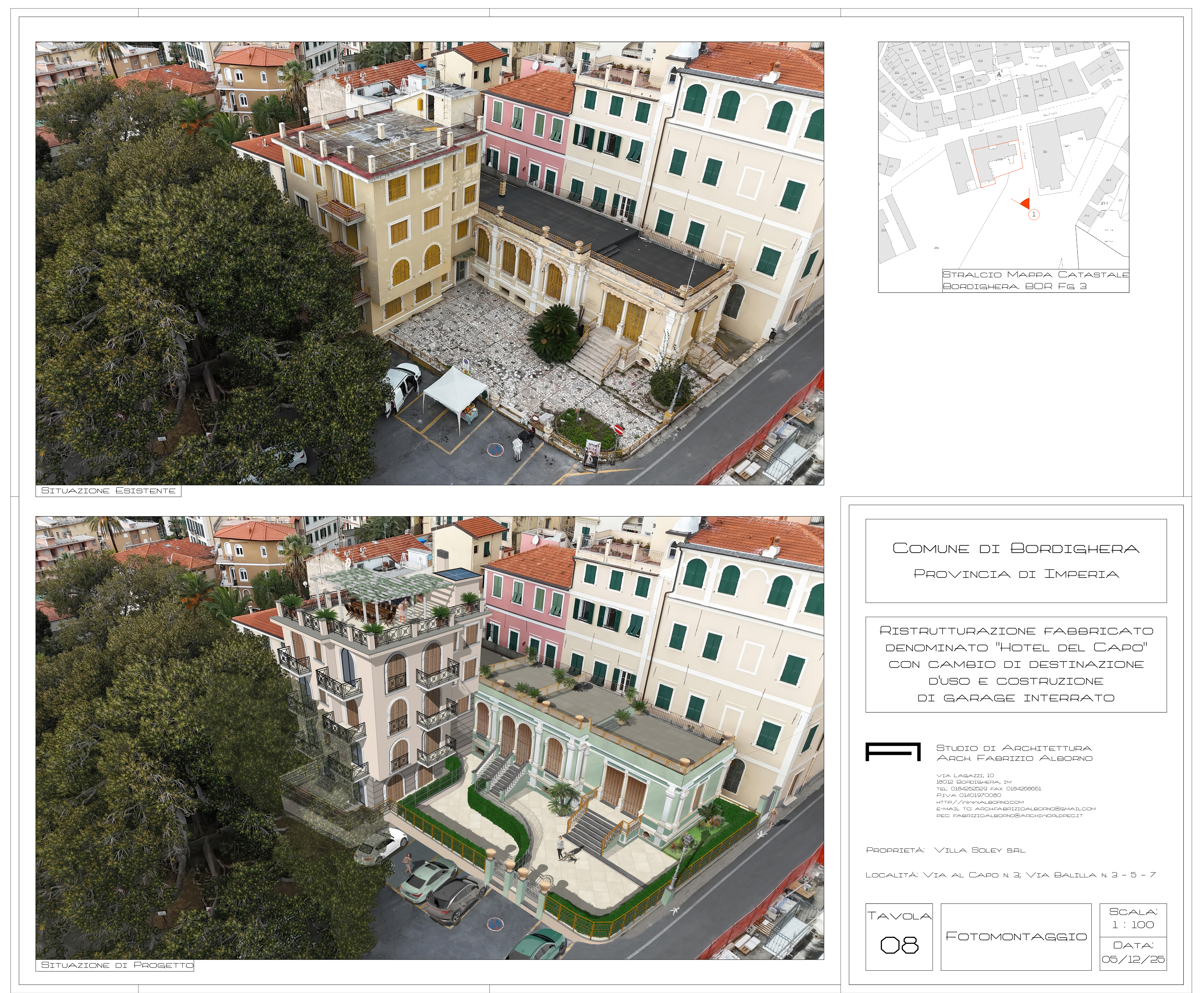
Renovation with change of use of the former Hotel del Capo and construction of an underground garage – Bordighera (IM) – 2025/2026 – Under review / In progress
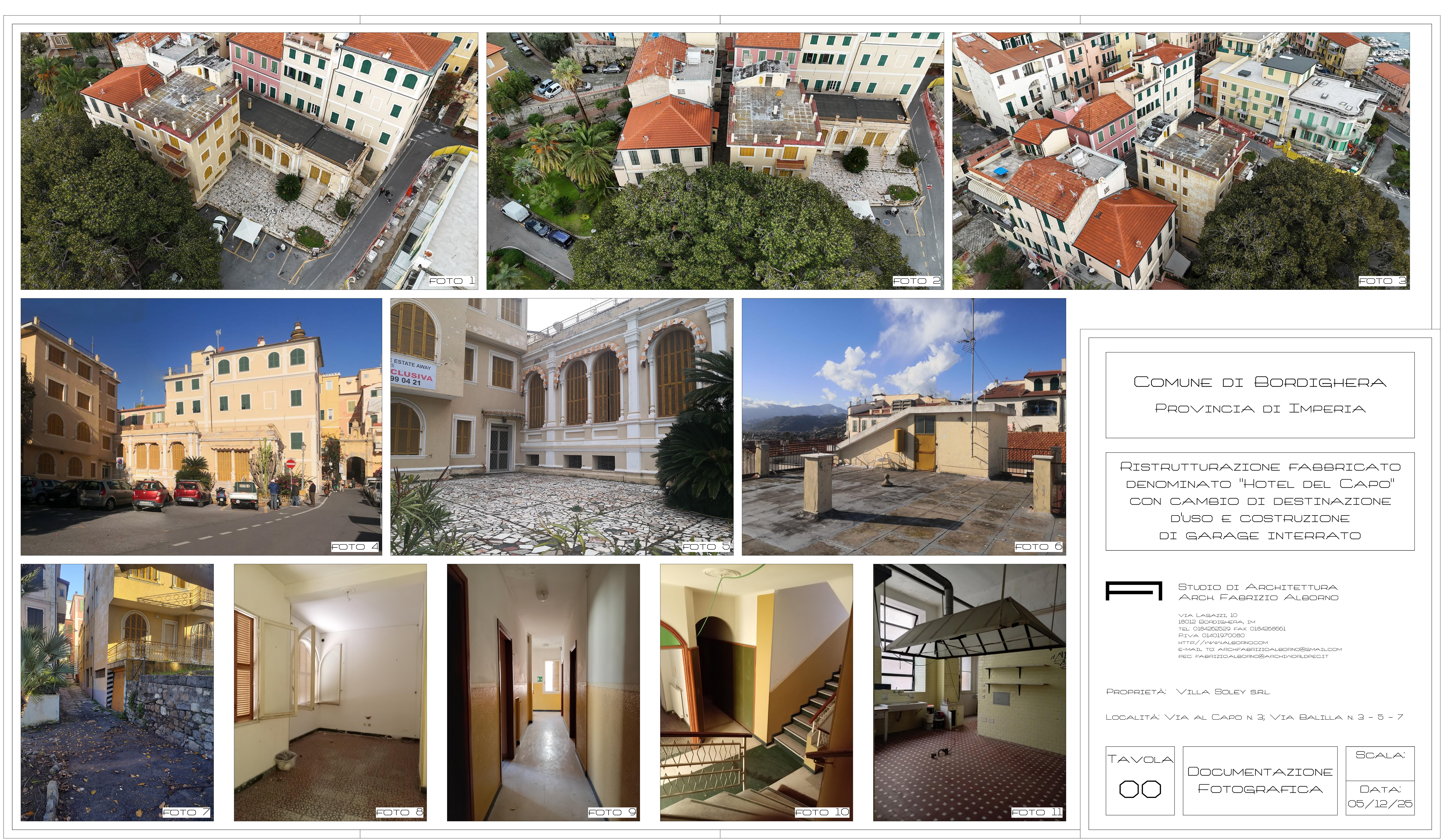
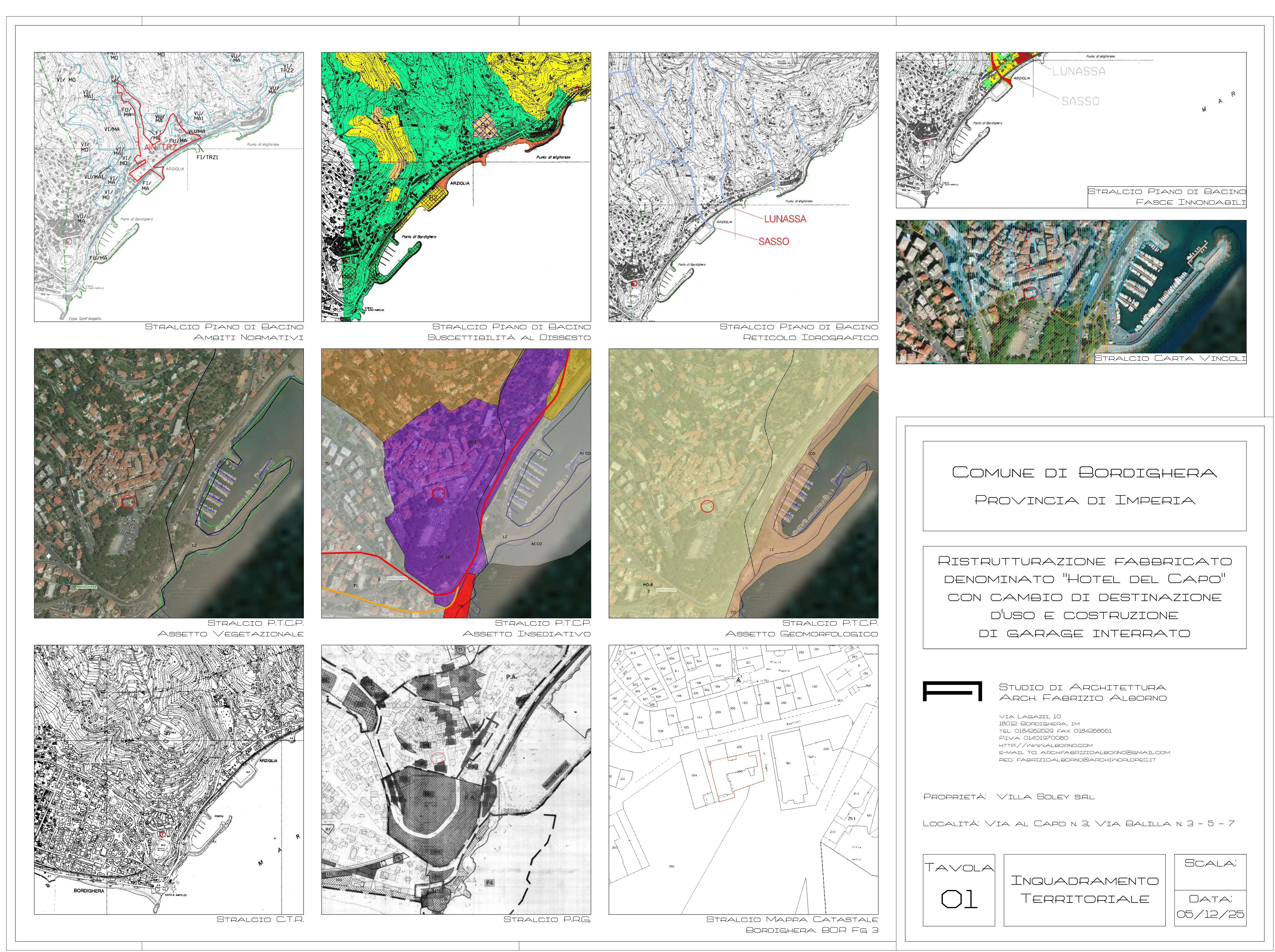
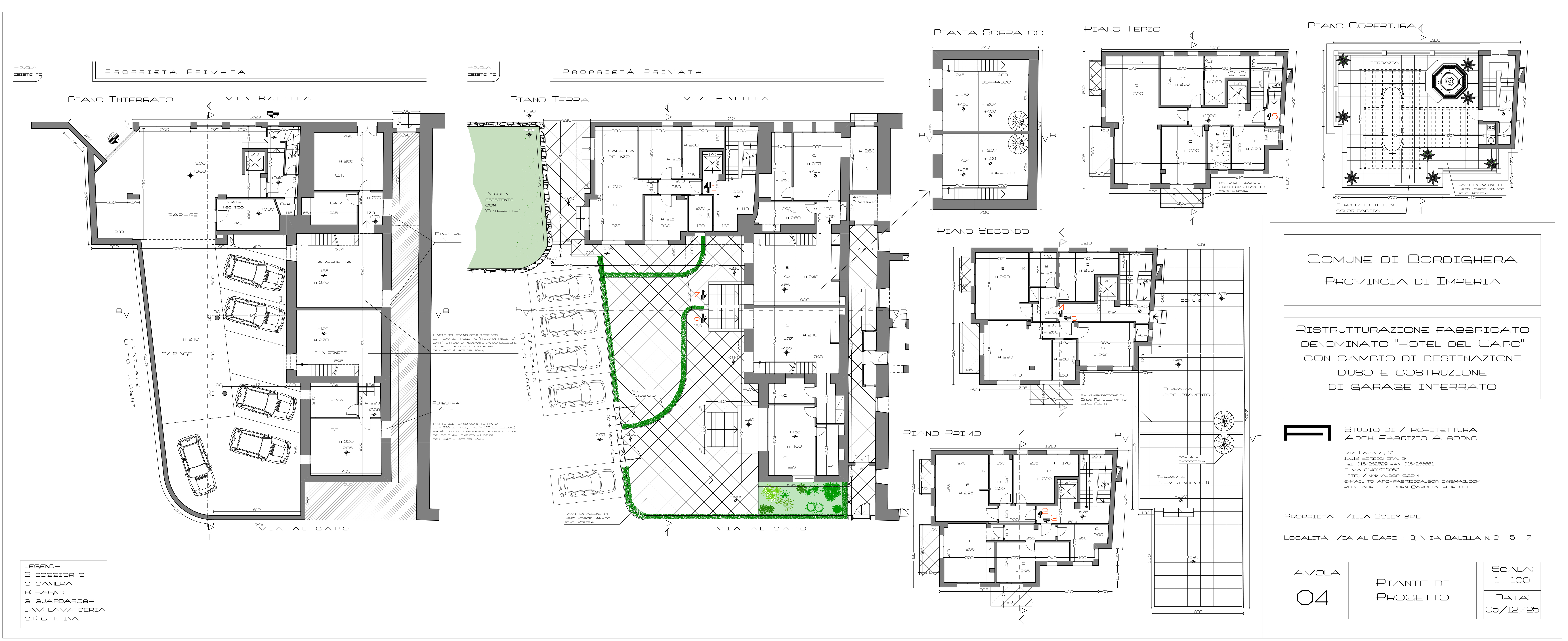
The project concerns the complete renovation of the property known as the “former Hotel del Capo,” located at the entrance to the historic center of the Municipality of Bordighera. The intervention involves a change of use from hotel facilities to residential use, with the construction of no. 8 residential units and the creation of an underground garage beneath the existing church forecourt facing the oldest building structure.
The property is currently in a serious state of neglect, both internally and externally, having been unused for several years. In the past, approval had already been granted for the change of use from hotel to residential, following an application submitted under protocol no. 6160 dated 14/04/2009. However, the project was never completed due to internal issues within the applicant company, and in 2018 the procedure was formally withdrawn (protocol no. 24035 dated 15/10/2018 – P.E. 6918).
With the present submission, activation of the project proposal through the hotel-use release is requested once again, specifying that the urban planning and administrative conditions remain unchanged compared to those already assessed and approved by the competent offices and by the Municipal Administration (City Council approval).
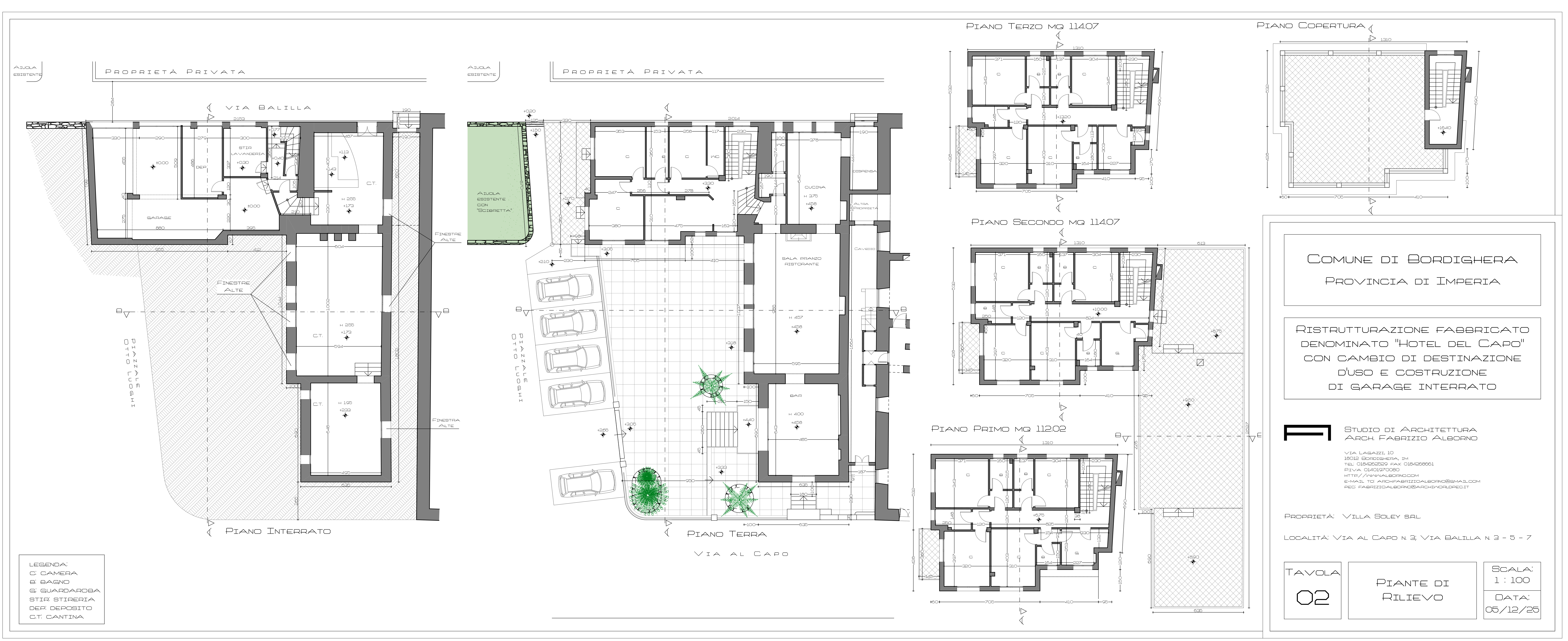
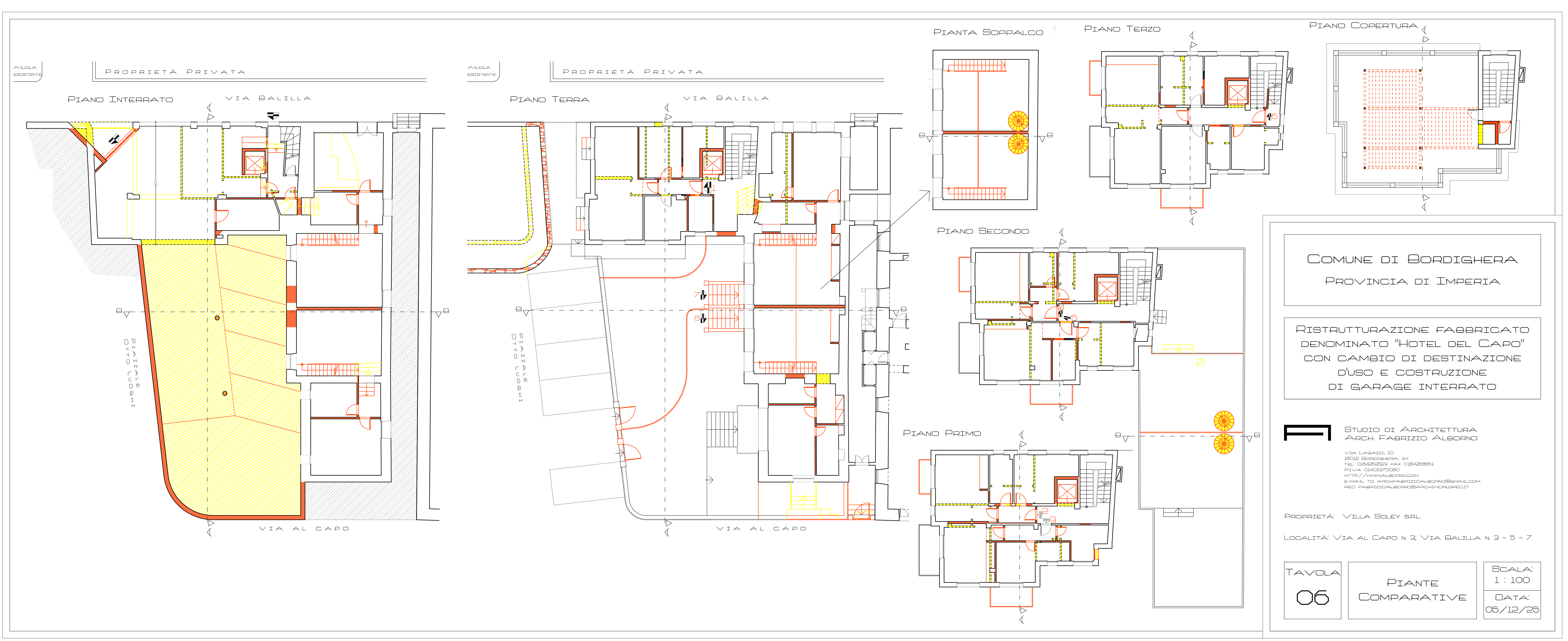
The new project proposal therefore provides for the complete renovation of the building with no increase in volume. The works mainly involve internal reorganization through the relocation of partition walls and doors, complete replacement of building systems, sanitary facilities and flooring, as well as upgrading the electrical and plumbing systems in compliance with current regulations, as detailed in the attached design drawings.
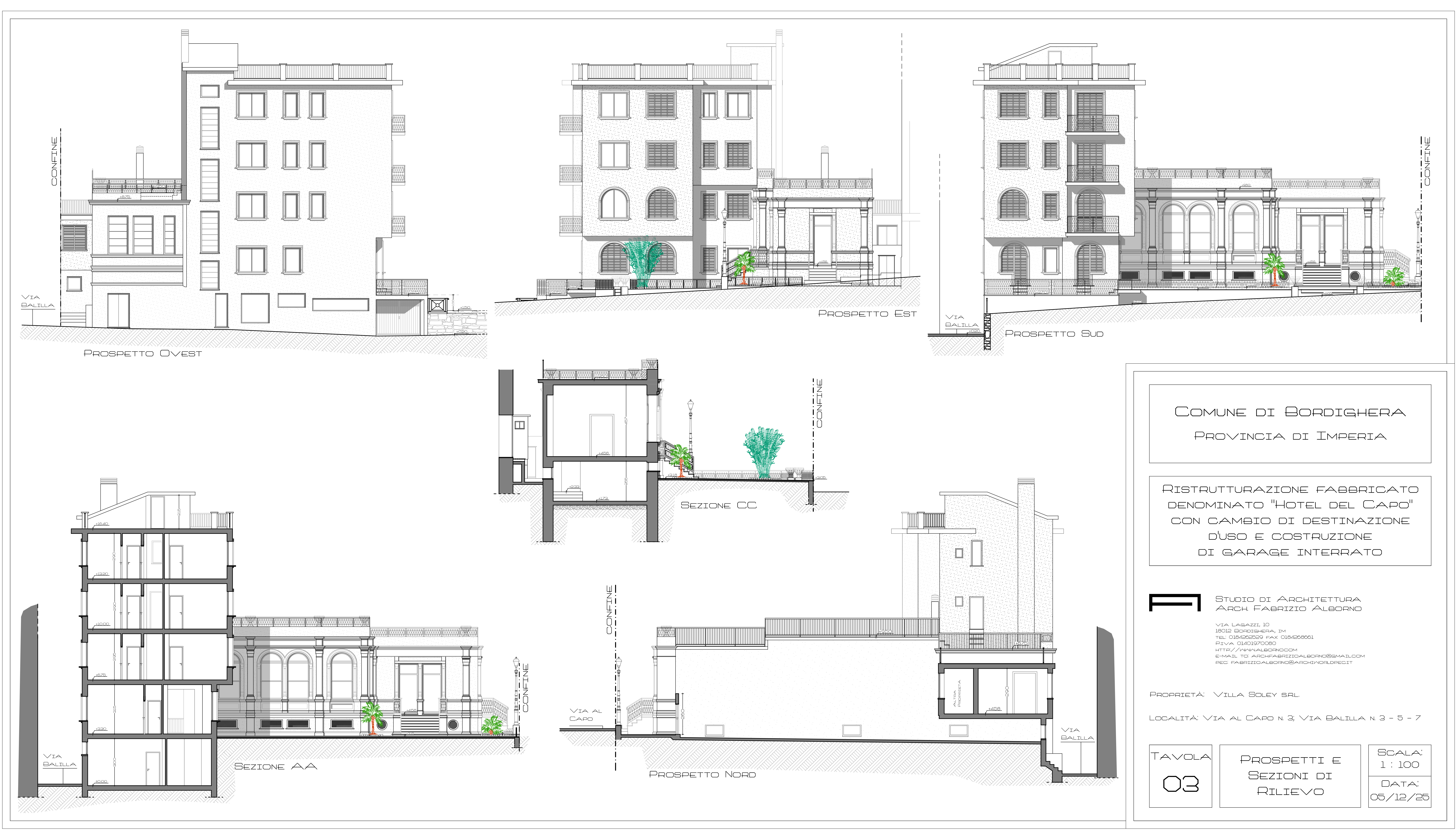
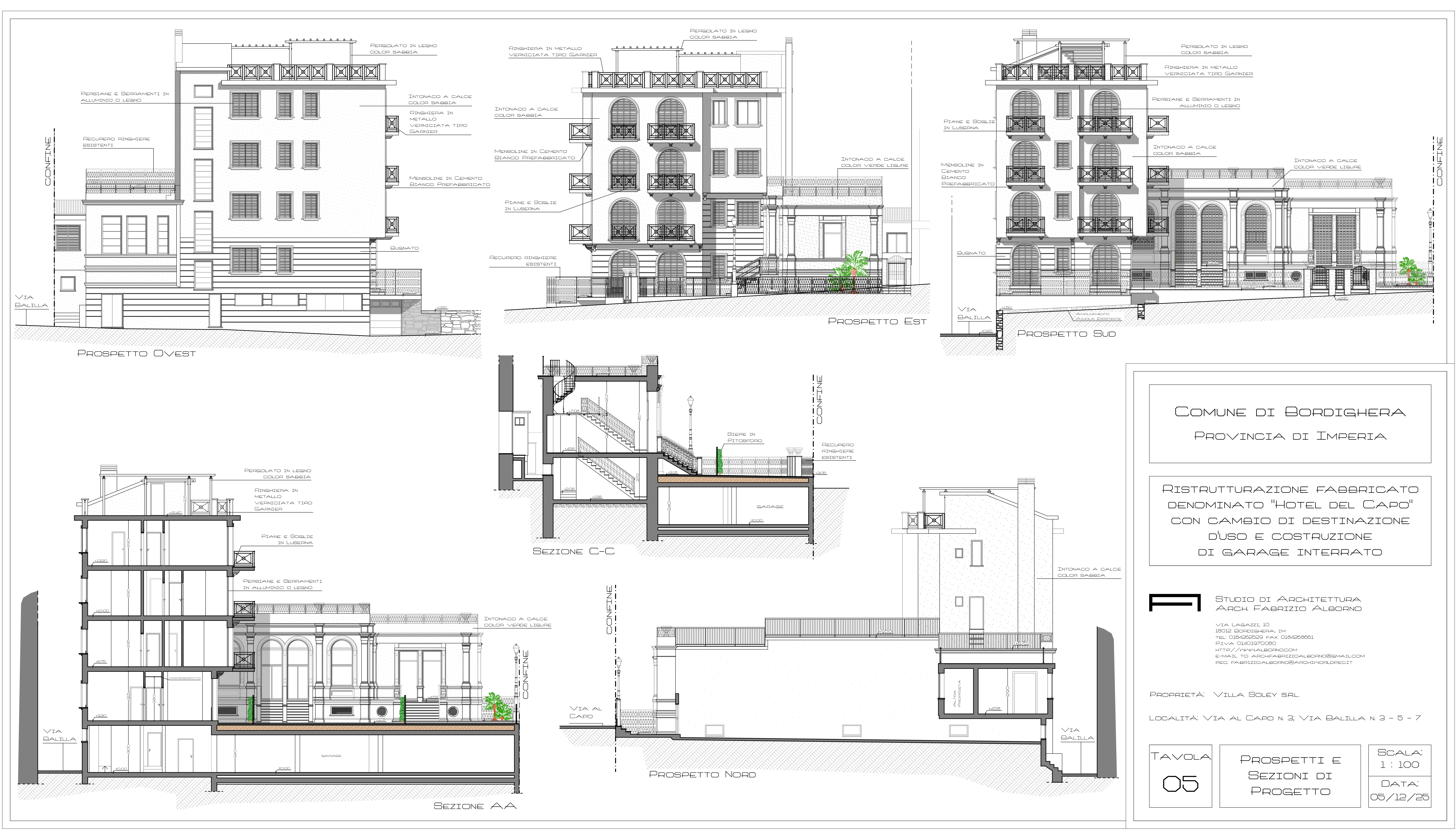
Lowered plasterboard ceilings are planned in corridor areas and bathrooms, together with restoration of plasterwork and subsequent painting. Floor-to-floor heights and the building’s eaves height will remain unchanged from the current condition.
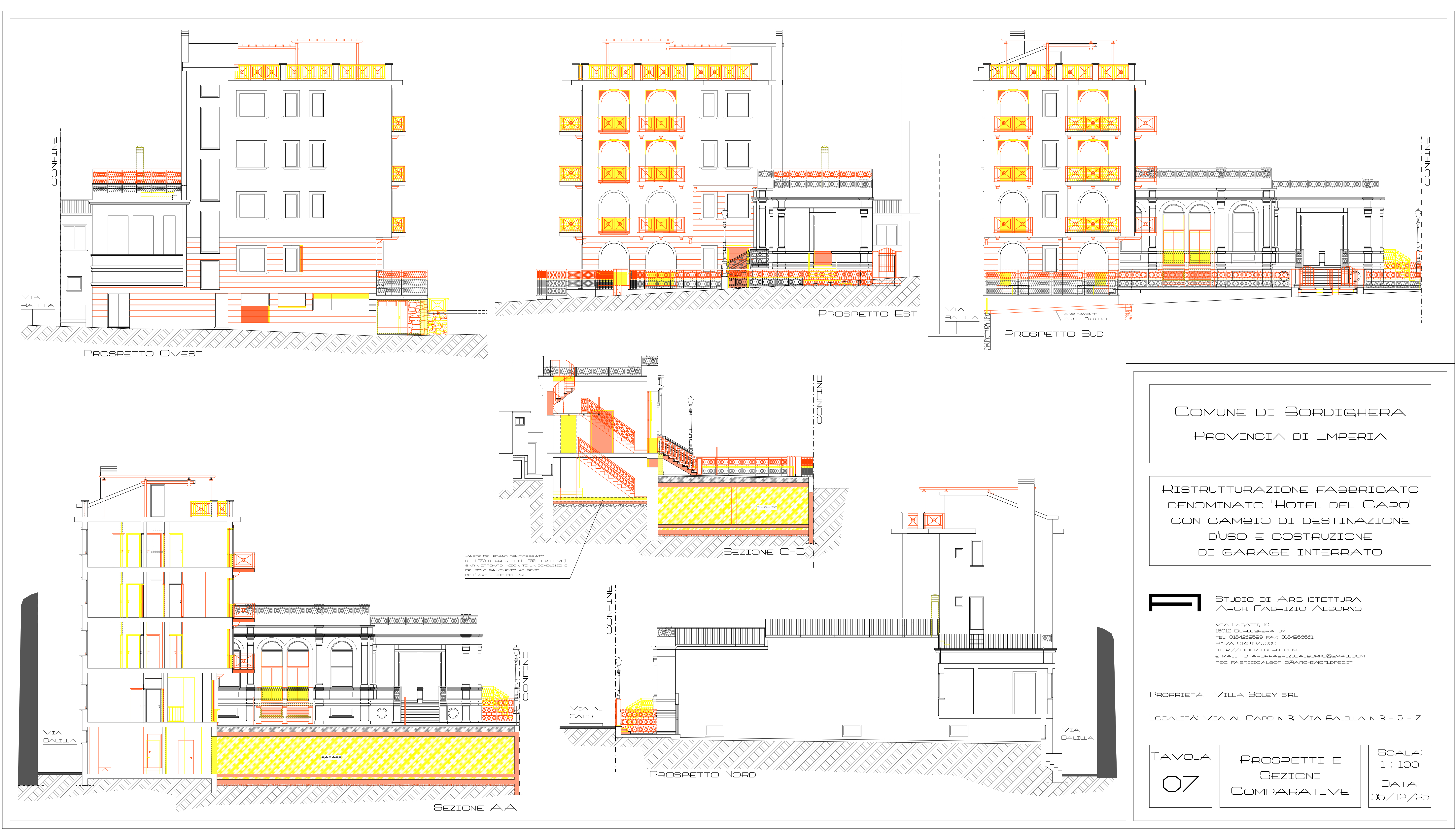
Openings on the façades will be slightly modified to allow for the construction of new terraces, converting some windows into French doors, as shown in the graphic documents. In addition, some vaults will be modified to ensure typological uniformity between the two building bodies that make up the property as a whole: the older structure dating back to the early 20th century and the volume added around 1964.
With regard to utility networks, the building is already connected to the municipal sewer system and water supply, both located along Via Balilla / Via del Capo.
External paving, including roof terraces, will be executed in porcelain stoneware with a sand-finish or similar. The forecourt will be restored in its current configuration and converted into an entrance and private garden area for the residential units located in the older building body.
The existing railings will be partially retained, restored and adapted in order to preserve consistency with the historic volume, and complemented by the installation of pitosporum hedges and other native plant species in planters, thus ensuring adequate privacy and a pleasant integration of greenery, also perceptible from the public space. This intervention is particularly significant considering that the area is currently classified as a municipal parking lot and that the building represents a gateway to the historic center of Bordighera on the “Capo” side.
The apartments located in the older building body will be equipped with mezzanines, constructed with a supporting structure of steel beams and wooden decking, bolted to the load-bearing masonry by means of L-shaped plates and not embedded into the walls. These mezzanines will accommodate ancillary rooms, connected by a staircase that will also provide access to the related roof terrace, as illustrated in the design drawings.
The construction of an underground garage is planned, obtained by expanding the existing one, entirely contained within the property boundaries and located beneath the forecourt. The garage will provide exclusively appurtenant parking spaces (no. 8) serving the residential units.
Access to the garage will be from Via Balilla (see graphic table no. 9), through a slight modification of the corner of the entrance wall and the enlargement of a small municipal flower bed, as shown in the same drawing. For this purpose, the proposed intervention—previously illustrated informally—is submitted for evaluation by the Municipal Administration. As compensation, it is proposed that the property owner carry out, at their own expense, the enlargement of the flower bed currently hosting the tree known as “Scibretta,” in order to improve its immediate green context, as well as the renovation and integration with local plant species of the flower bed at the entrance of Via Balilla, as indicated in the graphic documents. These works are intended to improve vehicular access to the new garage.
The garage will be built with a reinforced concrete structure, with an internal height of 2.40 m and colored smooth-finished concrete flooring. The construction of the underground volume will not interfere with the health condition of the tree symbol of Bordighera Alta, as certified by the attached agronomic report, considering that the specimen is not included in the list of monumental trees. Its preservation contributes significantly to the aesthetic enhancement of the project.
In our opinion, the proposed intervention will allow for a substantial redevelopment of the area, eliminating a structure with a strong visual impact that is currently in a state of decay and restoring to the urban context a renewed and enhanced building, with clear benefits for the surrounding area.
The color scheme planned for the older building body, in shades of sage green or Ligurian green, is intended to renew the image of the building and enhance its presence, while at the same time reducing the overall volumetric perception resulting from the proximity of the large building behind it, characterized by a similar color palette.
In the design drawings, new works are highlighted in red, while demolitions are shown in yellow.